
基础信息
作者:Randall Munroe,知名科普漫画家,网络漫画xkcd创作者。
完整书名:What If? Serious Scientific Answers to Absurd Hypothetical Questions。
读者向作者投递各种天马行空、荒诞离奇的脑洞假设问题,作者运用物理学、化学、天文学、生物学、工程学知识,严谨推演,给出科学解答,搭配极简火柴人黑白手绘插图(和封面画风统一)。
文风幽默通俗,没有晦涩公式堆砌;把枯燥理科知识结合脑洞场景,鼓励创造性提问、跨学科思考,非常适合英语演讲、议论文、科创主题作文,同时大量积累科普类学术词汇。
书籍内容特点
全书由数十个独立问答篇章构成,经典脑洞举例:
1. 如果棒球以99%光速投掷出去,会发生什么?
2. 全世界所有人同时跳起来,地球会震动吗?
3. 如果海洋全部干涸,世界会变成什么样?
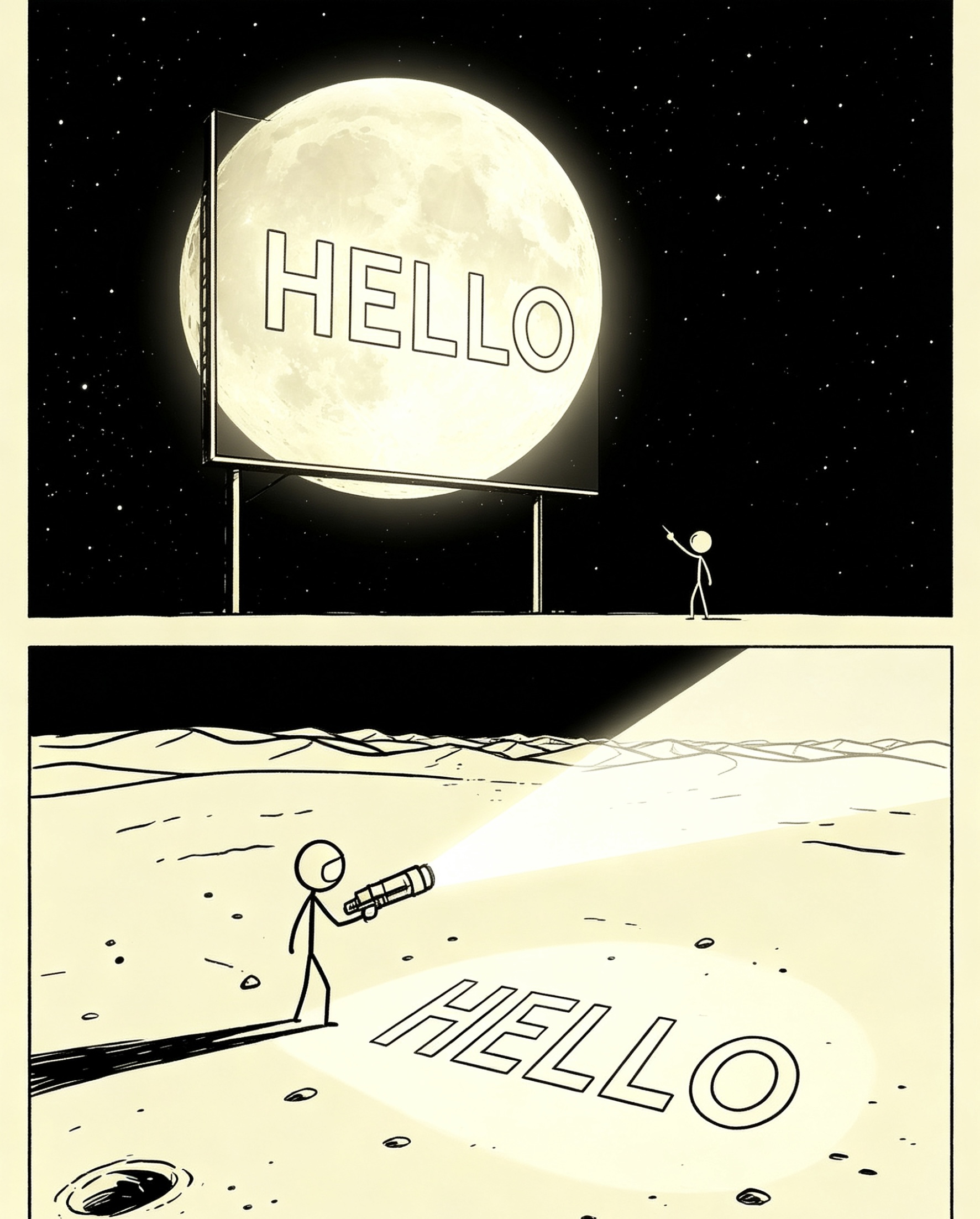
4. 能不能用激光把月亮上的文字投射到地球?
5. 人类持续多久不睡觉会产生致命后果?
作者解答模式:不直接简单说“不可能”,而是搭建模型、查阅文献、估算数据,一步步推演后果,同时坦诚科学边界:很多假设没有标准答案,只能推导可能性。书中经常提醒:科学不只是背诵结论,而是学会提出问题、理性推理。
三大核心
1. Curiosity 好奇心价值:看似无意义的幻想问题,是探索科学的起点
2. Critical thinking 批判性思维:大胆假设、严谨求证,区分猜想与事实
3. Interdisciplinary thinking 跨学科视野:真实世界的问题无法只用单一学科解决
What If?
Today I want to share a fascinating popular science book: What If? Serious Scientific Answers to Absurd Hypothetical Questions, written by Randall Munroe, the creator of the famous webcomic xkcd.
This book comes from thousands of strange, imaginative questions sent in by readers. People ask all kinds of wild hypothetical ideas. These questions sound ridiculous at first glance. For example: What happens if you throw a baseball at 99 percent the speed of light? What if every human on Earth jumps at the exact same time? Could we write huge words on the Moon and let people read them from Earth? Most people would laugh these questions off as pointless daydreams.
But Randall Munroe takes every question seriously. He does not simply reply “this cannot happen”. Instead, he uses physics, chemistry, astronomy, biology and engineering knowledge to build models, search research papers, calculate data and predict possible results. He also draws simple stick-figure cartoons to make complex ideas easier to understand, just like the artwork on the book cover.
As you read through each chapter, you will discover an important truth. Many great scientific breakthroughs started from seemingly silly questions. Curiosity does not need to be practical at the beginning. A wild guess can lead us to understand basic rules of our universe. When the author answers these absurd questions, he also explains fundamental science knowledge in plain, funny language. Heavy scientific theories become easy and fun to follow.
Besides popular science knowledge, this book teaches us a powerful way of thinking. It shows us how to separate assumptions from evidence. It encourages us to examine our logic step by step before reaching a conclusion. Sometimes, the writer honestly admits there is no definite answer. He reminds us science does not claim to know everything. Knowing the limits of our knowledge is just as important as collecting facts.
A lot of students believe science only deals with textbook problems with fixed answers. This book breaks that stereotype. Real scientific exploration begins with “what if”. Without curious questions, there will be no discovery, no invention and no progress.
This book is far more than a collection of fun facts. It inspires us to keep asking questions, think outside the box, and treat every imagination with respect. Whether you love science or you are just curious about the world around you, What If? will open your mind and let you see how wonderful logical reasoning can be.
核心名词
1. hypothetical /ˌhaɪpəˈθetɪkl/ adj. 假设的
2. hypothesis /haɪˈpɒθəsɪs/ n. 假说,猜想
3. absurd /əbˈsɜːd/ adj. 荒诞的,离奇的
4. breakthrough /ˈbreɪkθruː/ n. 突破(科学)
5. evidence /ˈevɪdəns/ n. 证据
6. assumption /əˈsʌmpʃn/ n. 预设、假定
7. physics /ˈfɪzɪks/ n. 物理学
8. astronomy /əˈstrɒnəmi/ n. 天文学
9. calculation /ˌkælkjuˈleɪʃn/ n. 计算,推演
10. curiosity /ˌkjʊəriˈɒsəti/ n. 好奇心
11. logic /ˈlɒdʒɪk/ n. 逻辑
12. reasoning /ˈriːznɪŋ/ n. 推理
形容词 & 核心动词
1. imaginative /ɪˈmædʒɪnətɪv/ adj. 富有想象力的
2. ridiculous /rɪˈdɪkjələs/ adj. 荒唐可笑的
3. fundamental /ˌfʌndəˈmentl/ adj. 基础的(原理)
4. predictable /prɪˈdɪktəbl/ adj. 可预测的
5. deduce /dɪˈdjuːs/ v. 推导,推断
6. simulate /ˈsɪmjuleɪt/ v. 模拟
7. examine /ɪɡˈzæmɪn/ v. 检验,仔细分析
8. explore /ɪkˈsplɔː(r)/ v. 探索
9. underestimate /ˌʌndərˈestɪmeɪt/ v. 低估
10. simplify /ˈsɪmplɪfaɪ/ v. 简化
短语
1. hypothetical question 假设性问题
2. speed of light 光速
3. logical reasoning 逻辑推理
4. step by step 一步步地
5. think outside the box 跳出固有思维
6. separate assumptions from evidence 区分假设与证据
7. scientific breakthrough 科学突破
8. at first glance 乍一看
9. plain language 通俗易懂的语言
10. the limits of knowledge 知识的边界
哲理句型框架
1. Great discoveries start from curious questions.
伟大的发现始于充满好奇的提问。
2. We should not dismiss ideas only because they sound strange.
我们不该只因想法听起来怪异就直接否定。
3. Science requires both imagination and strict proof.
科学同时需要想象力与严谨的证明。
4. It is okay not to have all the answers.
无法掌握所有答案,是正常的。
摘抄金句
1. Curiosity often starts with a silly-sounding “what if”.
好奇心,常常始于一句听起来荒唐的“假如会怎样?”
2. Just because a question sounds ridiculous doesn’t mean it isn’t worth thinking about.
一个问题听起来荒诞,不代表它不值得思考。
3. Science isn’t just knowing answers. It’s figuring out how to find them.
科学不只是掌握答案,而是摸索寻找答案的方式。
4. Imagination lets us test worlds that do not yet exist.
想象力让我们得以推演尚不存在的场景。
5. Sometimes the most useless questions unlock the most useful ideas.
有时,最看似无用的问题,会开启最有价值的思路。
6. We can learn a lot by examining the edge cases and extreme possibilities.
研究极端情形与边界假设,能让我们收获大量知识。
7. If you are not afraid of asking weird questions, you will see the world differently.
敢于提出奇特问题,你看待世界的视角将会截然不同。
8. Many rules of the universe only become clear when we push them to their limits.
宇宙诸多规律,只有推向极限时才清晰显现。
9. A good “what if” is the beginning of every adventure of the mind.
一个精彩的假设,是每一场思想探索的开端。
10. It’s fine to guess, but guesses work best when we test them.
猜想无可厚非,但猜想只有经过检验才有意义。